


U centru Zagreba indonezijska kultura pronašla je svoj dom, na adresi Ilica 150 smješten je prostor koji živi drukčijim ritmom, prostor u kojem se prelijevaju zvuci brončanih udaraljki, pokreti tradicionalnih plesova i melodija jezika koji mnoge privlači svojom muzikalnošću.
Sanggar Merah Putih, Indonezijski kulturni centar je suptilan most između dviju geografija i dvaju mentaliteta koji se iznenađujuće lako dodiruju.
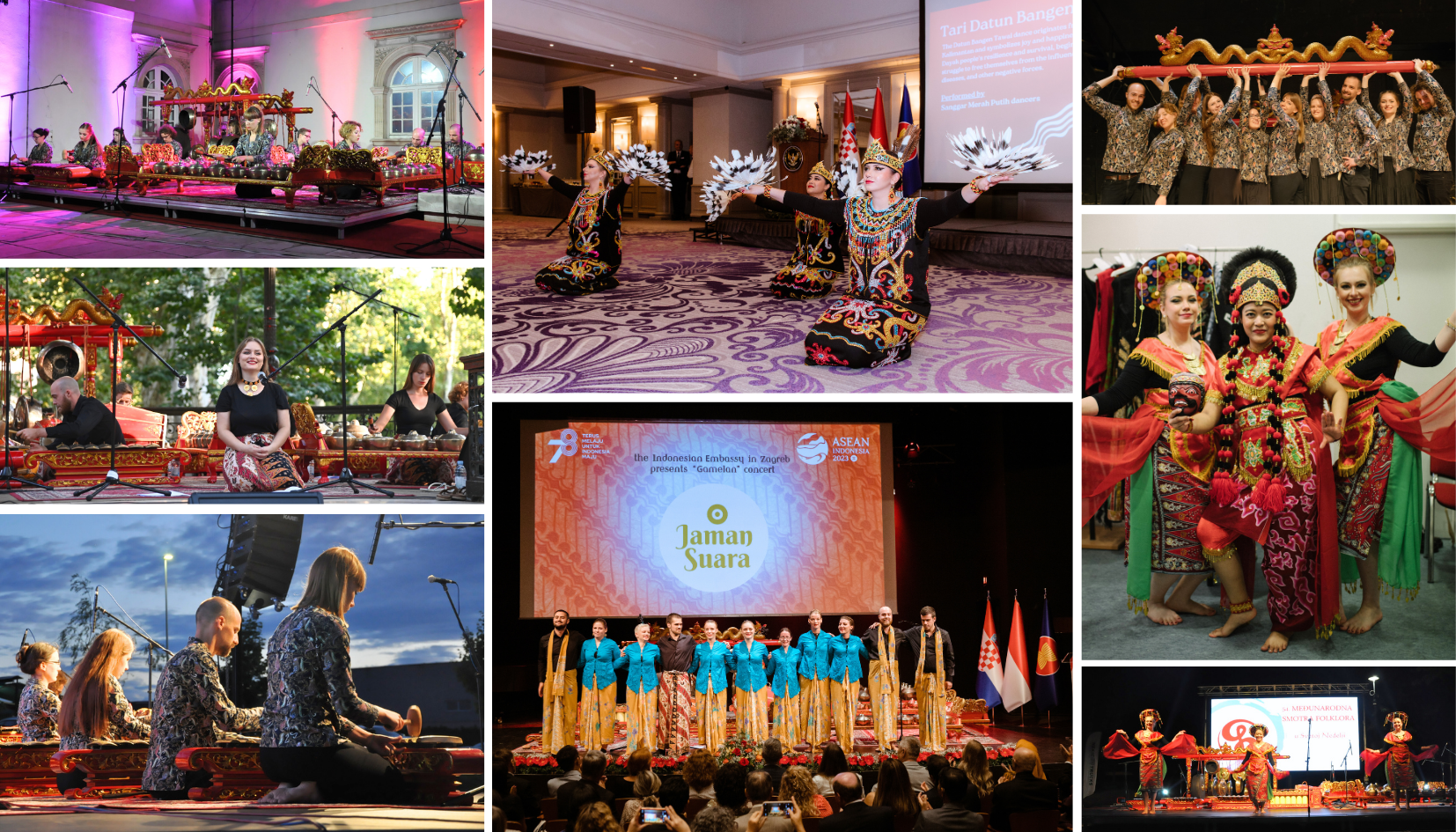
Od 2015. godine Veleposlanstvo Republike Indonezije otvara vrata svima koji su voljni učiti, stvarati i istraživati. Ono što je započelo kao niz radionica, postupno se pretvorilo u kulturni centar s vlastitim identitetom, otvoren, inkluzivan i vođen idejom da se kultura živi, a ne samo prezentira.
U gotovo deset godina djelovanja kroz Centar je prošlo više od stotinu polaznika, čineći ga jednim od najdinamičnijih mjesta kulturne razmjene u Zagrebu.
No brojke su samo površinski podatak; daleko važniji je prostor koji se stvara između polaznika i kulture koju upoznaju. To je prostor znatiželje, međukulturnog dodira i osobne transformacije.
Rituali učenja i tijelo kao arhiv
Učenje indonezijskog jezika u ovom kontekstu rijetko je samo akademski čin. Voditeljica tečaja, kulturna antropologinja Tijana Mrđić, prenosi jezik kao živi sustav, kao otisak društvenih vrijednosti i imaginarija.
Kada polaznici prvi put izgovore riječi koje im zvuče poput melodije, oni ulaze u prostor gdje se jezik ne uči napamet, nego kroz senzibilitet prema kulturi iz koje potječe.
Slično je i s plesnim radionicama koje vodi Mursethia Birowo. Tijelo polaznika postaje arhiv, kratkotrajni, ali intenzivni spremnik za tradiciju koja se prenosi pokretom. Tari Yapong, Tari Topeng Klana ili Tari Beksan nisu samo stilovi, nego društveni sustavi gesti, ritmova i identiteta.
Zvuk kao putovanje bez distance
Možda najdublji susret s Indonezijom događa se kroz gamelan – glazbeni sustav koji ne pristaje na zapadnjačku logiku harmonije, nego oko slušatelja gradi vibracijski prostor. Kad brončane ploče i gongovi zazvuče, prostor Centra postaje nešto između glazbenog studija i meditativne zone.
Upravo je gamelan najjača simbolička osovina Centra. Uveo ga je profesor Johannes Radjaban, a razvila etnomuzikologinja Julija Novosel, koja je u Indoneziji provela više od dvije godine proučavajući tu glazbenu tradiciju.
Povratkom u Hrvatsku osnovala je ansambl Jaman Suara, jedini gamelan sastav u zemlji, čije su izvedbe postale ne samo glazbeni događaji nego i kulturni fenomen.
Nastupi u Lisinskom, na Međunarodnom festivalu folklora ili u osječkom Kulturnom centru djelovali su poput malih zvučnih portala, kratkih trenutaka u kojima Zagreb na trenutak izgleda kao Yogyakarta ili Surakarta.
Kada učenje preraste u putovanje
Zanimljivo je primijetiti da polaznici Centra vrlo brzo razvijaju više od pukog interesa. Za mnoge od njih učenje jezika ili plesa postaje početak dubljeg osobnog puta. Mnogi su zahvaljujući stečenom znanju otputovali u Indoneziju, neki ondje studirali, drugi se privremeno preselili, često uz podršku indonezijskih kulturnih stipendija.
To je važan detalj: Centar ne nudi samo tečajeve, nego iskustvo koje ljude potiče da zakorače u drugi svijet i u njemu pronađu nešto što im pripada. U kulturnoj antropologiji to se ponekad naziva “transformativno učenje”, trenutak kada kultura koju proučavamo počne mijenjati i nas same.
Indonesia in Zagreb: A Quiet Geography of Encounter
In a city that sometimes appears cautious toward the exotic, Indonesian culture has found an unexpectedly natural home. At Ilica 150, behind the modest façade of a typical Zagreb building, exists a space that lives by a different rhythm, a place where the shimmer of bronze percussion, the gestures of traditional dances, and the melody of a language unfamiliar to most, yet immediately captivating, come together.
Sanggar Merah Putih, the Indonesian Cultural Centre, does not function as an imported curiosity but rather as a subtle bridge between two geographies and two mentalities.
Since 2015, the Embassy of the Republic of Indonesia has been opening its doors to anyone willing to learn, create and explore. What began as a series of workshops gradually evolved into a cultural centre with its own identity, open, inclusive, and guided by the belief that culture is something to be lived, not merely presented. Over the past decade, more than a hundred participants have passed through the Centre’s programs, making it one of Zagreb’s most dynamic spaces of cultural exchange.
But numbers only skim the surface; far more important is the space formed between the participants and the culture they are discovering. It is a space of curiosity, cross-cultural touch, and personal transformation.
Rituals of Learning and the Body as an Archive
Learning the Indonesian language in this setting is rarely just an academic pursuit. Led by cultural anthropologist Tijana Mrđić, the classes present the language as a living system, a reflection of social values and cultural imagination. When students pronounce the first phrase, words that sound almost like music, they step into a space where language is absorbed not through memorization, but through sensitivity to the culture from which it originates.
A similar process unfolds in the dance workshops led by Mursethia Birowo.
The body becomes an archive, a temporary but intense vessel for traditions transmitted through movement. Tari Yapong, Tari Topeng Klana, or Tari Beksan are more than dance styles; they are social systems of gesture, rhythm and identity. Watching Croatian participants dance reveals something essential: cultural transfer is never a simple act of copying. It is always the creation of something new, a dialogue between two worlds.
Sound as a Journey Without Distance
Perhaps the deepest encounter with Indonesia occurs through gamelan, a musical system that resists Western ideas of harmony and instead creates a vibrational space around the listener. When the bronze keys and gongs resonate, the Centre becomes something between a music studio and a meditative zone.
Gamelan is the Centre’s strongest symbolic anchor. Introduced by professor Johannes Radjaban, it was further developed by ethnomusicologist Julija Novosel, who spent more than two years studying the tradition in Indonesia. Upon returning to Croatia, she founded Jaman Suara, the country’s only gamelan ensemble, whose performances quickly became not only musical events but cultural phenomena.
Concerts in Lisinski, appearances at the International Folklore Festival, and performances in Osijek and Zagreb have acted as small sonic portals, moments in which Zagreb briefly resembles Yogyakarta or Surakarta.
When Learning Becomes a Journey
It is striking how quickly participants move beyond simple interest. For many, learning the language or dance becomes the beginning of a deeper personal path.
Numerous students have travelled to Indonesia, some to study, others to live, often through cultural scholarships. Many say their first contact with the Centre provided them with a foundation that transformed their experience abroad, allowing them to understand and appreciate Indonesia more profoundly.
This is key: the Centre does not simply offer courses; it offers experiences that encourage people to step into another world and find something there that resonates with them. In cultural anthropology, this is sometimes called “transformative learning”, the moment when the culture we study begins to change us.
Sandra Petra Pintarić @ Dharma Yoga Zagreb # „Dharma Reset – život u ravnoteži“
ZELENA GEOMETRIJA I DEMONSTRACIJA MOĆI # Versailles vrtovi i barokna vizija živog organizma prirode, apsolutna simetrija by André Le Nôtre


